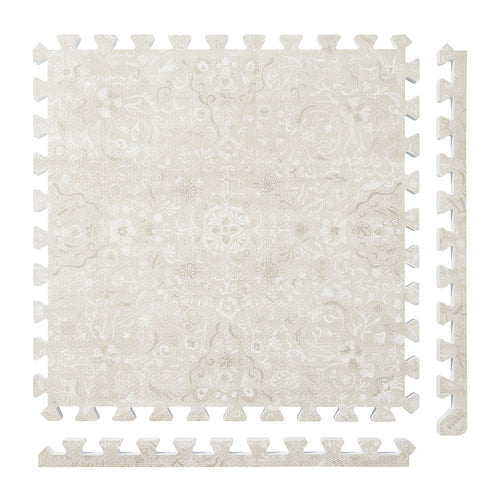
Persian Garden
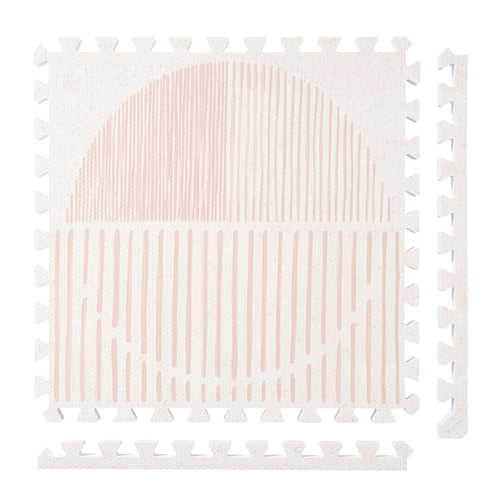
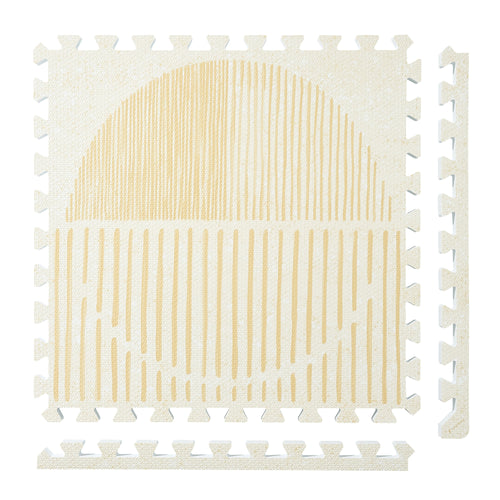
 Firework
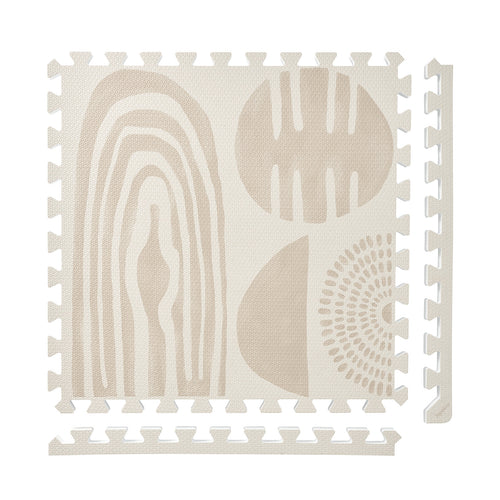
 Boho
Boho
 Little Builders
 Boulder
 Tranquil Flower
 Totem
Totem
Dog Stair Landing Floor Mat Guide
Quick answer: A stair landing is the one place where a badly fitted mat is worse than no mat — a loose edge or sliding tile next to stairs is a hazard for dogs and humans alike. The rule: cover the landing fully with an interlocked, bordered layout that cannot shift, or skip the mat there entirely. And if your dog's movement on stairs has changed, that's a vet conversation, not a flooring purchase.
Fit the landing first
| Check | Why it matters at a landing |
|---|---|
| Full coverage, wall to wall | A partial mat leaves edges in the turn path — exactly where paws and feet pivot. Interlock tiles and finish every exposed side with border pieces. |
| Nothing overhangs the top step | Keep the mat's edge clearly back from the stair nose — no exceptions. |
| Doors, rails, transitions | Check swing clearance and that the mat sits below door bottoms and doesn't ride up at rail posts. |
| Cleanability | Landings collect what gets carried up and down — a wipe-clean surface earns its place here. |
| Recheck after cleaning | Every time tiles are lifted to clean, re-seat and re-check edges before the dog uses the stairs. |
Use care guidance when needed
If your dog struggles with stairs or movement, ask a veterinarian about ramps, gates, rugs, nail care, and other setup changes — the floor is support, not treatment.
FAQ
What mat works on a dog stair landing?
A fully fitted, interlocked, bordered layout that cannot shift and stays clear of the stair nose. If full stable coverage isn't possible, skip the mat there.
Is this a mobility product?
No. Treat it as a household floor surface and use veterinary guidance for mobility needs.
Explore further: Dog ramp landing mat · Dogs on hardwood · Pet guide