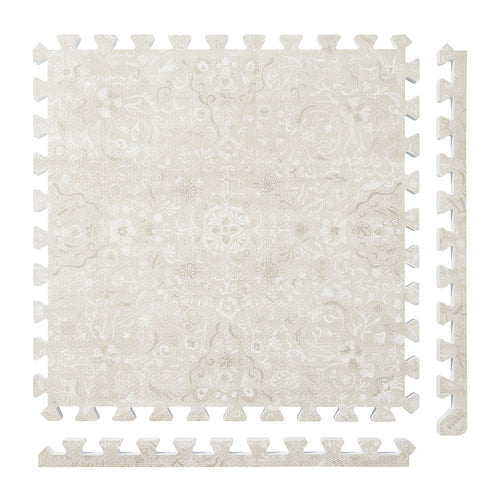
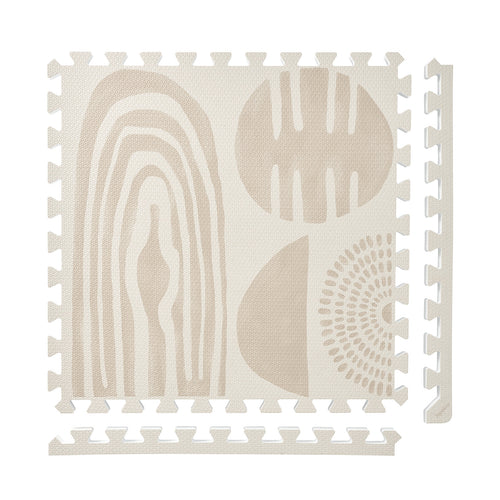
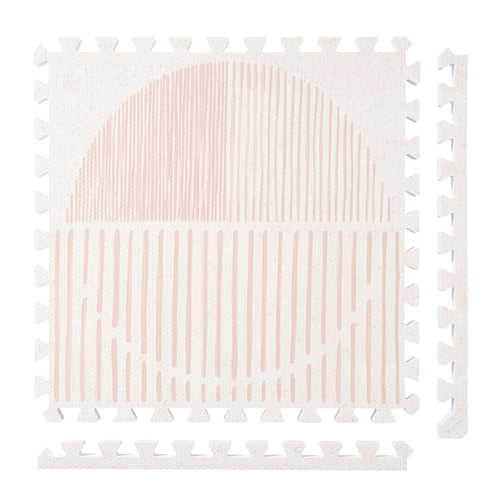
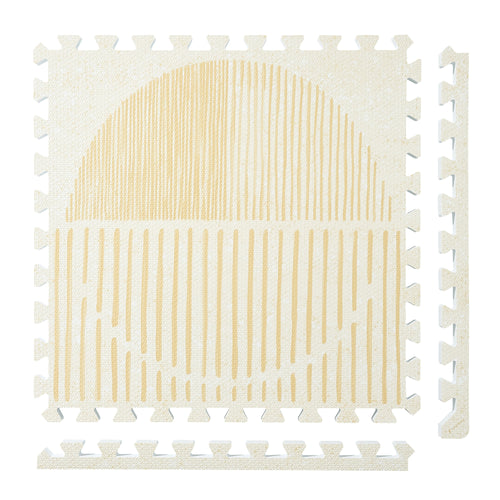
Persian Garden
 Firework
 Boho
Boho
 Little Builders
 Boulder
 Tranquil Flower
 Totem
Totem
Dog Place Mat for Training and Rest: Define the Zone Clearly
Short answer: the dog needs a clear cue surface, not the largest floor covering. Choose the place mat or bed by the training plan and the dog's comfort needs. Modular flooring can organize the surrounding room, but it should not blur the boundary of the trained station.
Separate three different surfaces
| Surface | Job | Owner |
|---|---|---|
| Place cue mat | Creates a consistent training target. | Training plan or qualified trainer. |
| Rest bed | Supports the dog's preferred resting posture. | Dog-specific comfort and veterinary guidance when needed. |
| Room floor | Defines the broader household zone and cleanup route. | Room plan. |
Visual boundaries help consistency
A smaller mat with a clear edge can be easier to cue than a wall-to-wall soft area. Keep the station away from door congestion, food traffic and unstable furniture. Everyone in the household should use the same cue and release routine.
Chewing and scratching need honest planning
No consumer floor is dog-proof. Supervise dogs that chew edges, provide appropriate enrichment and remove damaged pieces from access. A replaceable tile can simplify room recovery, but it does not replace behavior or veterinary support.
Where PopsyKosy fits
PopsyKosy is Designed in LA and uses 100% EVA foam core + 100% EVA film surface. It can define the surrounding shared floor for pet and family routines. It is not a dog bed, training target or therapeutic joint surface.
Build the broader room around the station
Keep the cue mat visually distinct, then use Build Your Floor for the separate room zone and review the pet-floor guide.
FAQ
Can PopsyKosy be the dog’s place cue?
A trainer may prefer a smaller distinct target. PopsyKosy is better evaluated as surrounding room flooring.
Is it chew-proof?
No. Supervise chewing behavior and remove damaged pieces from access.
Does a senior dog need a different setup?
Possibly. Ask a veterinarian about pain, mobility or bedding needs before choosing the direct rest surface.