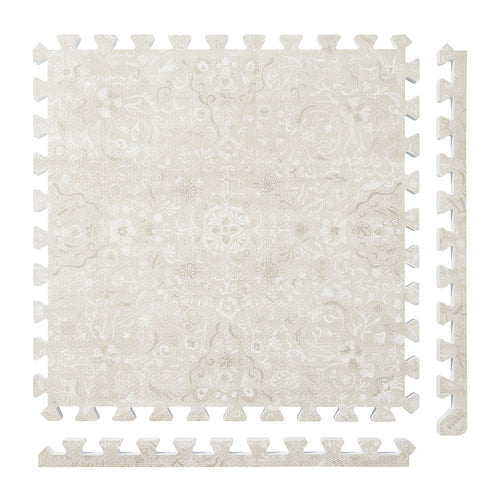
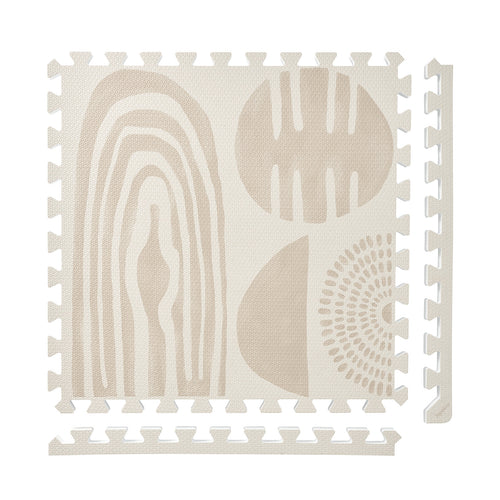
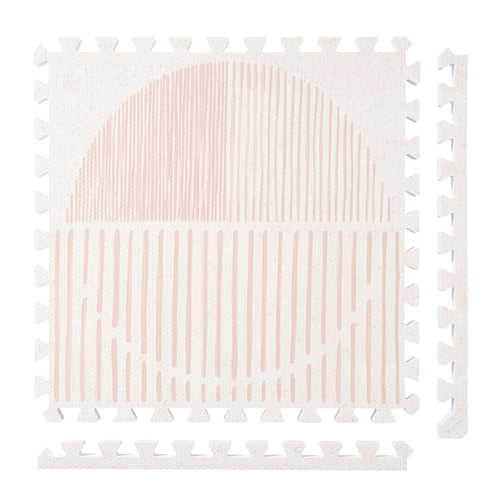
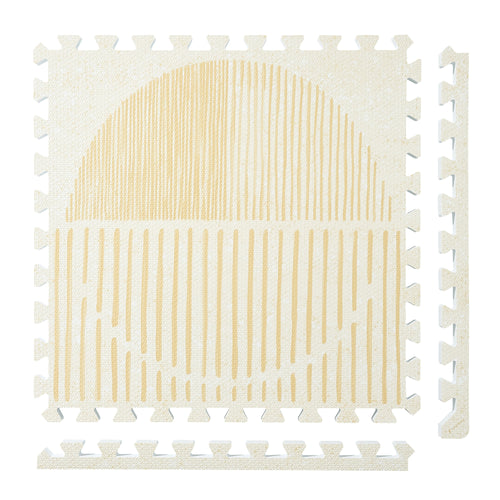
Persian Garden
 Firework
 Boho
Boho
 Little Builders
 Boulder
 Tranquil Flower
 Totem
Totem
Coral Play Mat: How to Use Warm Color Without Overwhelming the Room
Short answer: coral works best when it connects two or more warm elements already in the room, such as wood, terracotta, blush textiles or warm white walls. Use it as the visual lead in a quiet room or as a small supporting note when wallpaper, bedding or furniture already carries strong color.
Read coral by undertone
| Room condition | Better coral direction |
|---|---|
| Warm oak or maple | Muted coral can bridge the wood and soft textiles. |
| Cool gray floor | Use deliberate contrast and repeat coral in one textile or object. |
| Warm white walls | Coral can become the primary color without feeling isolated. |
| Colorful wallpaper | Choose a quieter floor pattern so the wall remains the lead. |
| Low natural light | Review samples carefully because coral can read deeper and redder. |
Use repetition, not exact matching
Repeat coral once or twice at a smaller scale in a cushion, art print or storage detail. Avoid matching every object. A room looks more designed when one color travels through different materials and intensities.
Plan for daily visibility
Very pale or very dark areas can show crumbs, fur and dust differently. A varied coral pattern may create less visible contrast than a flat-looking solid. Cleaning remains the answer; color should not be used to hide maintenance.
Where PopsyKosy fits
PopsyKosy is Designed in LA and constructed with 100% EVA foam core + 100% EVA film surface. Its modular format lets a family mix measured rows and treat the floor as part of the interior rather than temporary play equipment.
See the color at room scale
Compare current patterns, then use Build Your Floor to judge repetition and coverage instead of choosing from one close-up swatch.
FAQ
Does coral work with wood floors?
Often, especially when the wood has warm undertones and coral is repeated in one smaller room element.
Is coral gender-specific?
No. It is a warm design color that can be styled through the room's materials and contrast.
Should coral match the walls?
Not exactly. A deliberate relationship usually looks stronger than an almost-match.