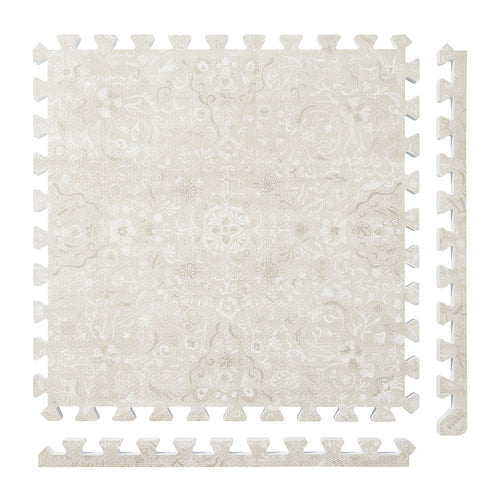
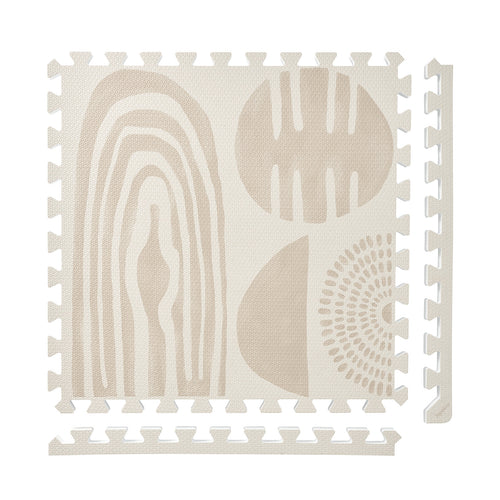
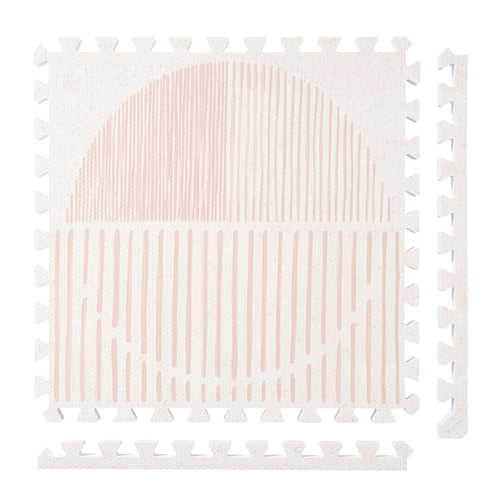
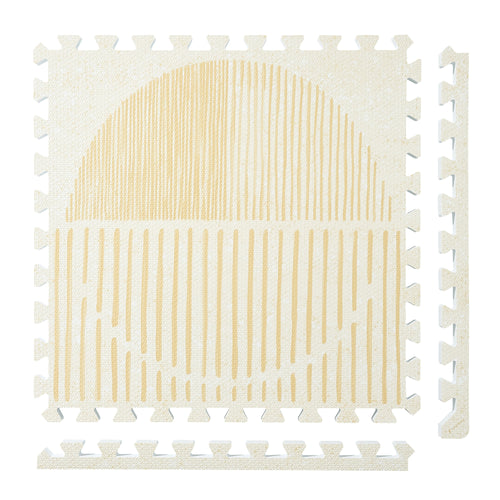
Persian Garden
 Firework
 Boho
Boho
 Little Builders
 Boulder
 Tranquil Flower
 Totem
Totem
Non-Toxic Yoga Mat: What to Look For
Quick answer: A non-toxic yoga mat claim should be backed by current material documentation, not just eco language. Compare the exact material, odor profile, cleaning instructions, grip needs, cushion feel, and the test records behind the claim.
Cushioning vs a thin sticky mat
A typical roll-up yoga mat is built for portability and grip. A larger cushioned floor surface can be better for home stretching, restorative floor work, and multi-use wellness corners, but it is not a replacement for every studio practice.
What non-toxic should mean
Look for named standards, report dates, tested materials, and a clear explanation of what the documentation covers. Avoid relying only on words like eco, natural, or non-toxic.
Grip, cleaning, and longevity
For yoga, stability matters. Compare the surface texture, underside behavior, sweat cleanup, storage, and whether the mat is made for your exact practice.
Where PopsyKosy stands
PopsyKosy mats are 100% EVA foam core + 100% EVA film surface — no XPE, IXPE, or recycled PE, with for the complete mat, USP Class VI-tested EVA, and CPSIA/CPC, ASTM F963, EN71, REACH, and Prop 65 documentation. We're the room, not the practice mat: for grip-heavy standing work, many homes lay a firm yoga mat on top of the cushioned floor. 2-year warranty, 30-night risk-free trial, single-tile replacement.
FAQ
What makes a yoga mat non-toxic?
Clear material documentation, current reports, and care instructions are stronger than broad marketing language.
Is a thicker EVA surface good for yoga?
It can be useful for home stretching and floor comfort, but a specialized yoga mat may be better for grip-heavy studio practice.
How do I clean a yoga mat?
Follow the maker's instructions. For PopsyKosy EVA tiles, use mild soap and water and avoid harsh chemicals or steam cleaning.
Explore: EVA for yoga · · Wellness guide · Shop mats